A brief memoir of my days as a barkeeper (and why ex-barkeepers make great employees)

Cocktails
Cocktail Group – by kurmanstaff.

Over the years since I finished high school I’ve had the immense good fortune to work with a handful of remarkable people who have inspired me deeply; who have mentored me and taught me an incredible amount about myself.

The first of these was not a CEO or a VP; he had, in fact, nothing to do with the technical career I was then aspiring to pursue. He was a barkeeper.

A cocktail maker in fact; “Chief Cocktail Maker”, if such a title existed. His name was Ted; he was in his mid fifties then and had worked in the same piano bar in Sydney’s inner southern suburbs for something like 20 years.

The cocktail bar was part of a large lounge and bar complex, filled to overflowing with glittering poker machines and rowdy teenagers. In the midst of this sea of lights, noise and excitement, Ted’s little cocktail bar was an island of quiet and still.

There were many bartenders working at the club; maybe 40 or 50 at any one time. Ted was feared by some, awed by many; and respected by everyone. Something of a legend in the cocktail business, his skill with a boston shaker and hawthorne strainer was renowned.

Ted had worked in that dimly lit bar behind that lotus-green marble countertop for as long as he could remember, and as far as I know he’s still there now, mixing up his classic appleseed martini. And yet I learnt from Ted a few fundamental things that have stayed with me through my career as a Product Manager and helped define who I am and how I work.

How?

Firstly, Ted taught me the value of understanding the customer experience. When you come into his bar, you are not there just for the drinks. What you pay for is the end-to-end experience. This is something any good restaurateur understands: the quality of the meal itself is only as good as the quality of the experience surrounding it.

The same is true of software products. When you pay for a piece of software (either with cash, or with your attention), it’s not just the source code that you obtain – it’s an experience. And the experience doesn’t end with the user interface of the product. The sales process itself is part of the product, as is the customer support line, the warranty process, the packaging, and so on. And the user’s perception of every part of this experience influences their perception of everything else.

Ted taught me about this experience. The guest’s experience starts when they enter the bar and see how the room is lit, how the chairs are organised, what music is playing. It continues when they order their drink: the menu, the options. How a cocktail is prepared and presented to the customer is almost more important than how it tastes; in fact, mixing the ingredients in the right way is the easy part – the true artistry comes with the flair with which it’s prepared and the quality of the presentation in the glass. (The artistry involved in creating new drinks is quite something else, but that’s another story).

This brings me to the next critical skill I learned under Ted’s tutorage: attention to detail.

Cocktails
Red Stools – by Jack Zalium.

Ted was obsessed with orderliness, and every stool and every table needed to be perfectly positioned and perfectly aligned. He was known for walking through various parts of the club with a ruler, measuring the distance between the chairs and tables, as well as rigorously enforcing other standards of excellence, such as ensuring coasters laid out on the table were positioned so the text would be the correct way up for the seated guests, or that every bottled product served to a customer should be served with the label facing the guest (something actually every bartender knows and continues to do intuitively when placing bottles on the table, long after their bartender career has ended).

Details come in all forms great and small, and the ability to keep your eye on the details while maintaining the end-to-end view is, I believe, one of the chief virtues of incredibly successful people.

To understand the impact of these two things, consider the packaging of an Apple product, whether an iPod, MacBook or an iPad. Every aspect of the package has been considered; the colour, the use of images and type. Bold in its modesty, an Apple product stands out among the clutter through its thoughtful minimalism and stark beauty.

Attention has been paid to every aspect of the end-to-end experience, from what the product looks like on the shelf to the experience of taking the product out of the box and using it for the first time.

In every product I work on I come back to that which I learned during those long evenings in the Skyline cocktail bar. But Ted taught me more than that.

Cocktails
Library Bar – by ZagatBuzz.

Ted’s obsession with orderliness didn’t end at the alignment of the chairs and tables. If he saw a dirty table, he’d be the first to grab a rag and a spray bottle and he’d be off to clean it. If an ashtray had ash in it, he’d empty it, or if there as litter on the floor, he’d pick it up.

It didn’t bother Ted that he was actually the bar manager. He could have called the cleaners; he could have delegated to a more junior bar staff member. It didn’t matter that it wasn’t his job: if something needed doing, then he’d do it.

Ted, of course, expected nothing less of the people who worked for him, and the result was a culture where “not-my-job” thinking just didn’t exist.

Every team has issues that don’t get resolved as quickly as they probably should – old, un-refactored code, unanswered customer support queries, lingering bugs. But when these things start to stack up into ever-increasing piles, I’ve found that it’s often due to an established “not-my-job” attitude, and changing this attitude once it’s ingrained in a team is very difficult.

On top of all that, my time in Ted’s cocktail bar taught me that hard work is rewarding work. It might sound like a socialist slogan, but when I fell into bed at 4am after making cocktails all evening, I fell asleep exhausted, but fulfilled. I’d had fun at work, I’d learned something (which I did nearly every day), I’d met interesting people and helped serve an experience to our guests that they appreciated and told their friends about.

You might not believe it, but it’s truly amazing what you can learn in a bar.

Cheers!
5 viral product marketing myths


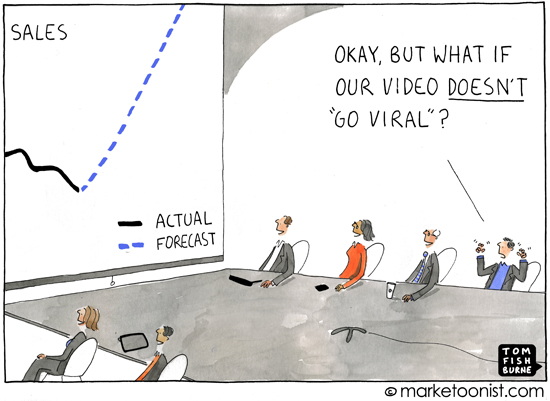
“Go Viral” by Tom Fishburne.

Everybody’s saying it…

“Let’s make it go viral!”

“We need to build in some virality.”

“It should be more viral!”

The problem I have encountered often recently is that many people seem to have various misconceptions about what ‘viral’ really is, what it really means – but mostly how easy (read: difficult) it is.

I hit the web and spoke to some friends and colleagues in the industry and uncovered quite a few myths and legends concerning viral products and viral marketing. Here are a few virality mythbusters for the next time someone turns up at your door asking you to “just make your product go viral”.

MYTH:
Virality is only including the ability to share stuff to social networks from within your product.

BUSTED:

The ability to share content to social networks from within applications is just expected functionality these days. True and proper “virality” for social apps is not just letting your users share objects out of your product (although it helps).

Apps that successfully use a viral engine of growth build the core interactions around the need or desire to involve your friends in the product experience. In other words, it’s not about broadcasting your status to your friends: it’s about using the product together with your friends. Some classic examples of apps that have gotten this nailed are Words with Friends or Farmville.

MYTH:
Virality is automatically posting everything that happens within an app to the user’s facebook wall or twitter feed.

BUSTED:

No, this is just annoying. If the Facebook news feed logic doesn’t start blocking your updates, your user’s friends certainly will. Sure, some early products made it big by spamming their user’s facebook feeds, but this just doesn’t work anymore.

MYTH:
A clever, witty and funny message (ideally with a kitten) will automatically “go viral”.

BUSTED:

The reality is that most attempts to create something witty with the specific intention of making it “go viral” will fall flat. People are smarter than that, and they know when someone’s trying to play them.

A notable example is when Ashanti thought it would be a neat idea to support her new album by creating a viral campaign that let people send their friends death threats. No further comment necessary!

“Making it go viral” should not be the goal. Viral is the outcome of a great piece of content that successfully engages users.

MYTH:
Sharing the first link on your facebook wall and Twitter feed is enough to start the avalanche.

BUSTED:

Nope. Viral messages need to be seeded properly. It’s all about momentum. If it takes too long to get started, it will die out before it reaches its peak. Properly seeded viral messages start by getting spread by people with many thousands of followers… not the 250 people on your personal twitter post.

Serious marketers also pay big dollars to seed messages. In fact, social media agencies measure return on investment (ROI) on social campaigns by how many views a message gets relative to how much cash they spend to seed it.

Now, don’t get me wrong: clearly when you an everyone in your team tweet and post and blog about your product or message, it can only help. In fact, I view it as a very important activity for the whole team to be a part of… but the point is, it’s (probably) not going to result in a million views overnight.

MYTH:
If we make a product video and upload it to YouTube, our marketing work is done… YouTube will do the rest.

BUSTED:

Over 72 hours of video are uploaded to YouTube every minute. Yes, every minute. However, some research has indicated that less than 1% of videos get more than 5,000 views in a year. YouTube is a crowded, cluttered space, and not every video is going to stand out, and you’re going to need to do a little more than just upload it to YouTube and hope for the best.

Here’s an example: the official Nokia YouTube channel has, at the time of writing, 635 videos uploaded. Of that, only 22 videos (3.5%) have more than 1 million views, and only two videos have more than 5 million. And of those 22 with more than a million views, only five videos are less than 12 months old.

Compare that with some classic examples of viral successes, such as this Evian commercial, which has over 58 million views.

Clearly, a lot of varied content helps raise the overall number of views (109 million aggregated views for the whole Nokia channel), this total is not the result of one silver bullet-style viral video, and it wasn’t achieved overnight.

Social media is a powerful set of tools to allow you to reach unprecedented numbers of people. But if your message is not compelling and engaging, then people won’t engage with your message. Just like the fascination (and the birth and massive growth of an entire industry) surrounding Search Engine Optimisation (SEO), you can try to play the system, but at the end of the day if your content is not compelling, the tricks won’t help you… at least not long-term.

People share content that they care about and that is meaningful for them. Something “going viral” is the result; it should not be the goal.

Dear NULL

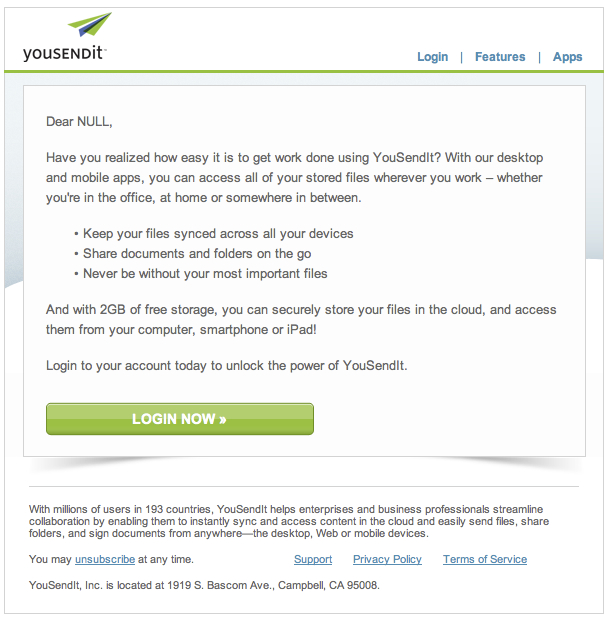
You Send It - Fail
It’s a simple thing to get someone’s name right.

Yousendit had an opportunity. They had my email address from whenever I had signed up to their service in order to download some file or another. I knew the service and trusted it enough to sign up, and if I had left my email address, I had surely left my name as well.

Since then I obviously haven’t been back, but they had the opportunity to send me a single, polite, targeted email message to remind me of the service, let me know what’s been happening, and maybe convinve me to come back, check it out and perhaps even start using it again.

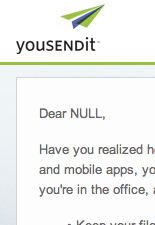
And yet the first line of the email: “Dear NULL”.

As someone whose name people often get confused (I get called “Gil” a lot. Evidently it’s quite a popular French name here in Europe), I know how not-nice it is to be addressed with a name that’s not your own; especially by people who are supposed to know you.

Each opportunity to have to have a meaningful conversation with a user is a gift. It’s a unique chance to build a valuable relationship with someone who will use your products or services and tell others about their great experience.

Attention is more and more expensive and more and more rare, so when you manage to get the attention of your users, even for a moment, use it wisely – don’t squander it.

And you can start by getting their name right.

You Send It - Fail

Seeing the future

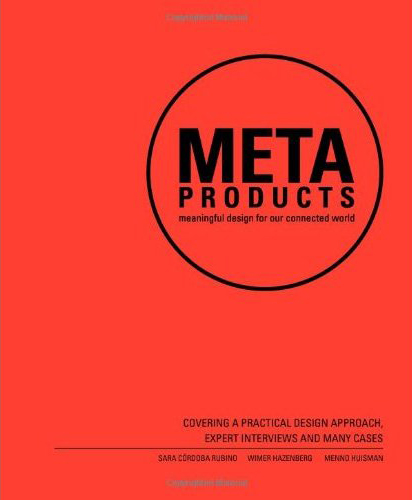
I found a great quote from the book Meta Products (Rubino, et al) on what makes future thinkers and innovators good at innovating, and I just had to share it:

“We’ve studied the ideas of some of the well-known futurologists and innovators such as Juan Enriquez, Steward Brand and Katherine Fulton among many others, and we can identify a similarity between them that perhaps can explain why they are so good at looking at the future: they are genuinely interested in ‘change’ and in understanding why we change. They keep abreast of scientific discoveries and research challenges. They are very interested in linking the past to our present and intuitively reflecting on the future. There are characteristics in the attitudes of the great futurologists and innovators that cause them to be constantly dissatisfied with the ordinary, forcing them to look for controversy and confrontation wherever they are. It’s not that they are difficult people, it’s probably just their way of identifying the real motivators for doing what we do, and why we change. Futurologists and innovators also love serendipity — when you find something you weren’t expecting to find, or when you have the ability to link together apparently unrelated facts to create unexpected and valuable new information.”

In other words, the ability to “predict” the future is linked heavily to one’s ability to see and understand not only the past, but how our aspirations and motivations as humans cause us, and with us our society, to change. Change is the greatest opportunity for new innovations and new business models, and understanding the human aspirations behind change can help us see what is coming. So, a student of human aspiration is in a unique position to understand the evolution of human wants and needs.

The book is an incredibly interesting exploration in product design in the fully connected world: the so-called “Internet of Things”. How should we as designers and creators of products enable fully connected experiences through our products and services?

You can read the whole book online for free here, or you can buy the print version from Amazon here.

The Product Vision

The Complete Product Owner series - Act I: The Product

The Complete Product Owner
Act I: The Product

This post is part of the “Complete Product Owner” series.

The centre-piece for any product team – the guiding north star – is the product vision. Where are we going? Why? What do we do when we get there? How will we know when we get there? These are all aspects of a compelling, motivating product vision.

A product vision is more than just a consumer value proposition, and it’s certainly more than a roadmap. It’s an idea, a mission. A pilgramage.

A product vision brings together the product proposition, the core values and beliefs as well as the mission and goals of the company. It answers the question “what”, “when” and, most importantly, “why“.

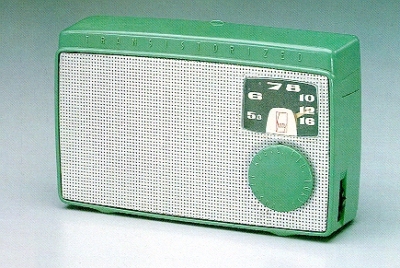
Sony TR-55 Transistor Radio
The Sony TR-55 Transistor Radio

In their great book on developing and communicating vision, Made to Stick, Chip and Dan Heath describe a great example of a clear, motivating product vision. In post-war Japan many companies were struggling to return to profitability. One small electronics manufacturer, Sony, set out to do something different: they would be the first company to produce a radio that fits into your hand. (Remember, this was a time when radios were pieces of furniture, and electronics manufacturers employed cabinet-makers to construct the elaborate wooden housings in which the electronics were assembled).

The vision was audacious and heavily motivating for employees, and it was clear. It was something everyone could understand and get behind, from the CEO to the factory assembly workers.

If the vision isn’t understood by everyone, it ain’t a vision.

The product owner as a visionary

The best product owners are visionaries. They have a clear idea where their product is going and how it will get there. They can see into the future and understand how various trends, innovations and technologies will come together to create the environment in which the product will succeed.

In his biography of the first years (and 500 million users) of Facebook, “The Facebook Effect“, author David Kirkpatrick reveals how Mark Zuckerberg carries a small notebook with him everywhere he goes in which he writes, in impeccable, tiny script, his thoughts and dreams about Facebook and building the social web. Mark had first imagined the ‘Timeline’ feature as far back as 2007 – a time when his users were still coming to terms with the idea of a news feed – and describes plans to turn facebook into the “social operating system” for the web. Zuckerberg not only understands his product today, he understands where he wants it to go.

Where do you want your product to go? What is the future for you?

The future can be years away. It might never happen. That’s not the point. The point is to understand in which direction the road goes: to have one north star which you share with everyone in your team, so everyone works towards the same goal and in the same direction.

Communicating the vision

What do a product vision, common display advertising and that monster under your bed when you were eight have in common?

Answer: If you stop paying attention to them, they lose their powers.

A vision is only half as useful if it is only stuck inside your head and not being discussed and used by the team on a daily basis. A vision is the most powerful when you share it with the team, discuss it, debate it; let it evolve. You want your team to have a shared understanding about the future as you do. For that, you need to share and communicate your vision.

The vision you have in your head might seem clear enough to you, but if you want to communicate it effectively to a wider audience, you will probably need to spend some time breaking it down into something more clear and succinct. Try writing your vision on paper in one or two sentences.

Here are some other techniques to help you refine your vision in written form:

The one-line mission statement

Mission statements got kind of a bad rap in the 90’s, but there is still value in boiling your vision down to one line so simple that everyone can understand it. Like Google’s mission to “organise the world’s information”. The goal is simple enough to understand, but it has majesty and scope (the whole world), ambition, and purpose.

Or the previous example from Sony “to build the first radio that will fit into your hand”.

The Story

Often, a great vision is best communicated with a story.

Take the example of Tom’s shoes from the previous post. Toms’ vision is to bring shoes to needy children in third-world countries. Tom’s communicates the vision with a story of how their founder, Blake Mycoskie, befriended some children in Argentina while he was traveling there, and found they had no shoes. He decided then and there to start Tom’s shoes company to raise money to send shoes to needy children. He returned to Argentina later that year with 10,000 pairs of shoes that he had produced with proceeds from his Tom’s shoes label.

The story not only describes the facts of what happened (he started a company and gave away 10,000 pairs of shoes), but it describes clearly the why. It describes the mission of the company and the core values of generosity and giving, in addition to the mechanics of how the proposition operates.

A fantastic resource on communicating with stories is the book The Story Factor.

The Manifesto

A useful tool for communicating a vision is often the manifesto. A manifesto can be 1 page long or 50. The important thing is that it describes clearly your position, your beliefs, and where you want to go.

Videos or slideshows

If you have some budget or time available you can put together a short video that describes your vision.

A nice example is this video from The North Face showing their brand manifesto.

Regardless what form you use to communicate the vision, remember that the core objective is to communicate a message that us clear, understandable and that will stick. For more tips on communicating a vision that sticks, I can strongly recommend Made to Stick.

A shared vision

Every product team can tell you how important it is that the product owner is available and accessible to the team. That’s true… but no product owner can be everywhere 100% of the time, and there will always be situations where decisions need to be made without you. The best teams work effectively and efficiently when you’re not around. In fact, the more good decisions the team can make without you, the more independent, engaged and effective they will be.

If the vision that you communicate to your team is short-term and focused purely on immediate deliverables, then the team cannot see ahead to know what’s coming next. It’s impossible to know what’s important if you don’t know where you’re going. Teams in this situation will always find themselves relying on the product owner to make all the product decisions.

On the other hand, teams who share your common vision of the future and the product have the same context as you to make product decisions. They understand where the journey is going, and as a result can more easily figure out how to get there for themselves.

It’s unrealistic to think that you can make every product decision yourself, and product owners who try usually fail; especially in medium to large-sized product teams. But when the team can make decisions for you, not only does it lead to more empowered and motivated teams, it frees up your time and attention to focus on more important things. Effectively communicating the product vision is the key to ensuring the team has the same idea as you about where you need to collectively go.

Live the vision

The last thing to remember about the product vision is that you, as the product owner, need to live the vision through more than just words. Make the vision a part of everything you do. This doesn’t mean just putting a poster up in the hall with your mission statement: it means making the vision the core of what you do.

During the development phase of the first Palm Pilot handheld organisers, co-inventor Jeff Hawkins went around for months with a block of wood in his pocket shaped roughly like what became the first palm device. At every appropriate point in a meeting or a conversation, he would pull it out and pretend to enter or retrieve some information from it, to test what it would be like to use one in real life. This not only helped him understand his product at a much deeper level, but it helped his team, observers and onlookers understand what they were there to achieve.

Keep your vision close to your heart, and live it with every decision and discussion.

Summary

The product vision is your north star. It guides you and your team towards your collective destiny. The product owner is responsible for defining and communicating the vision to the product team, and remember: if it’s not understood by everyone, it ain’t a vision.

In the next post in the Complete Product Owner series, we’ll look at setting product goals.

Resources


Attention to detail

The Simpsons: Homer and Scorpio

Homer: It’s nothing big; it’s just a lot of little things.
Scorpio: Homer, you can’t argue with the little things. It’s the little things that make up life.

In the biography written by Walter Isacsson, Steve Jobs recalls watching his father paint the posts for the picket fence in the yard of their Cupertino home in the 60’s. A young Jobs asked his father why he was painting the back of the posts as well as the front, even though nobody could see the back of the posts. His father replied: “because I know they’re there”.

This is attention to detail.

The little details count, and more than you probably think. Whether spelling or grammar; visual consistency or alignment; order or neatness: paying attention to the finer presentation details makes an important difference to your message. It doesn’t matter if it’s a visual interface within a product, an instruction manual, a marketing message, a powerpoint slide or a simple email: the principle is the same.

It’s not just about having a powerpoint slide with consistent punctuation… and it’s not about perfectly painted fence posts. It’s an attitude that you carry with you everywhere; that’s part of everything you do.

Some general tips:

  • If you have three paragraphs on a slide or page, and the first three have a fullstop and the last one doesn’t… fix it. Don’t use 5 different font sizes on the same slide.
  • If you’re writing code, take care to follow the coding guidelines. Document. Clean up after yourself. Keep it tidy.
  • Grammar, spelling, etc matter… whether in an email or in interface copy. Take care. Use a spell-checker. If you’re not a native speaker of the language you’re writing in, have someone proof-read it for you if it is something that will be seen by a lot of people.

The Competitive Landscape

The Complete Product Owner series - Act I: The Product

The Complete Product Owner
Act I: The Product

This post is part of the “Complete Product Owner” series.

Products never exist in a vacuum. Products live in a world of competitors and partners, of peripherals, networks and enablers. Products live inside an ecosystem consisting of companies, governments, regulators and consumers.

To understand what your product does, what value it adds and how, it is crucial to understand the competitive landscape around you.

A classic ecosystem
A “classic” ecosystem

Who else is doing what you do?

The first thing to understand is who is doing what you do. There may be companies offering the same or a similar value proposition as you, or companies in a similar space offering slightly different propositions.

For most industries a quick search on Google can usually reveal most of the competitive landscape. Additionally, talking with users and people from your target group, either as part of formal user research or casual conversations, can reveal other products and companies who are operating in your space.

When you have your list of main competitors, break them down one by one and take a close look at what they do. What are their strengths? What are their weaknesses?

A useful tool is the old, tried and tested, SWOT framework (strengths, weaknesses, opportunities, threats). If you’ve ever picked up a book on business then you’ve seen this tool, guaranteed. As cliche as it is, it is actually a useful method for breaking down the differentiation between you and your competitors. (For information on the SWOT tool, here is a pretty simple explanation with examples.)

Product

The first and most obvious place to start is by examining the product itself. How does their consumer value proposition differ from yours? Do they offer the same product features? The same user experience?

The differences between two products can be both subtle and large. Take for example these two products: Get Satisfaction, and User Voice. Both have a similar overall proposition: they are online tools that software products can use to get real-time feedback from users. Both are hosted solutions (meaning the integrating product does not need to add any code or infrastructure within their product; they just provide a link to the hosted feedback collection product), and both have similar price points. On the surface, they seem the same: but a level deeper and the differences begin to emerge, as described here. (Note on this thread the way the CEOs from each company compare their products against each other. Each CEO is acutely aware of the other company, but describes in detail, and with respect, the positive differences in proposition first, rather than focusing on negative elements of the “competition”. Admirable.)

Business Model

Differentiation against a competitor company does not always come purely from the consumer value proposition: the entire business model plays a role. Examine your competition’s business model and ways of working. How does their business model differ from yours? How do they organise themselves?

Marketing

How and where do your competitors talk to their users/consumers? What kind of messages do they use?

Values and beliefs

What do your competitors believe in? Do they believe the same things as you? What do they see as important, and how do they view the world, compared with you?

Consider the example of Get Satisfaction vs User Voice above. Although both products offer similar features at a similar price, the fundamental difference between the two products is what they believe is important. User Voice believes that the aspect of collecting suggestions and ideas from users is the critical axis, whereas Get Satisfaction focus more on the user forum aspect, where users can exchange knowledge, tips and report problems.

Both products offer nearly the same actual features, but what sets them apart is a core belief about what is important.

Learn from your competitors

Steve Jobs is often quoted as having quoted Picasso when he said:

“Good artists copy. Great artists steal.”

You can learn a lot from watching and analysing competing products carefully. Don’t be afraid to leverage knowledge, experience and solutions from other companies and products. If that other product has the perfect user sign-in experience, then take it, re-work it to fit your needs, and use it.

Remember, it’s not about having the pride of having “designed it all ourselves”. It’s about getting things done. Being (and remaining) successful as a product team is all about how quickly you can bring user value to users. The longer it takes, the more risk you pile up. (We’ll discuss this in much more detail in later chapters of The Complete Product Owner). If you can save a few days on the design of a peripheral flow, then do it.

Why should I buy your product over theirs?

One of the most common questions you will be asked as a product owner is: “why should I use your product over theirs?” In other words, as a consumer, why should someone pay you (with either their cash, their time, their clicks on ads, etc) for your product over your competition’s? What have you got that they don’t?

Here, a detailed analysis of the strengths and weaknesses will not help you answer this for a user. What you need is a story that not only reveals how you are different, but that encourages the use of one over the other. It comes back to your consumer value proposition: what value do you offer, and how?

This is another little “pitch” you should practice often, as I promise you, you’ll get this question all the time.

Broaden your scope

Also keep in mind it’s not just about your direct competitors. Broaden your scope to look at companies and products that operate in the same space as you, even if they are not direct competition. You can leverage ideas and knowledge from similar companies, or also look for interesting opportunities to partner with other products or companies for mutual benefit.

Summary

Your product and your company do not exist in a vacuum. You need to constantly watch, review, and analyse your competitors, your partners, and your industry. Know how you are different, and how you are the same. Also think about companies and products that operate peripheral to you; how can you leverage them or partner with them?

And always have a good answer ready to the question that will frequently come: “why should I buy your product instead of theirs?”

In the next post in the Complete Product Owner series, we’ll look at the product vision.

Resources


The Complete Product Owner series - Act I: The Product

The Complete Product Owner
Act I: The Product

This post is part of the “Complete Product Owner” series.

Beyond the flat digital map: what’s next for digital map services

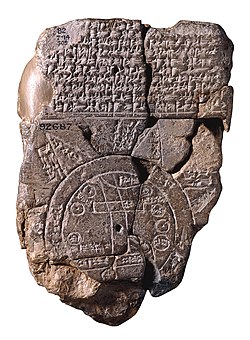
Babylonian stone map of the world.Babylonian map of the world, dated around 6BC. Source: Wikipedia
The map has come a long way since the Babylonians carved pictographic maps of their surroundings on large chunks of stone.

Ever since the appearance of the first digital maps many companies and products have appeared with the mission to produce better quality, more complete and more usable digital maps and navigation aids; among them Nokia Maps.

Since then, digital maps have become more detailed, more customisable, more accurate and more complete. Maps have become more visually engaging, with realistic 3D views of cities and countryside to add to satellite and terrain views of the world. But whatever visual abstraction, the digital maps today are still essentially a purely digital representation of their paper map ancestors: they are static. Sure, you have the ability to add different layers of information to the map or to customise the view (zoom and pan) – but these are just different ways of ‘holding’ the same map.

The vast amount of map-related innovation seen in mapping applications today in terms of the map visualisation have been in visualising data on top of the map. The very first Google Maps mash-up (Housing Maps) was a layer of real estate data on top of a plain, 2D map. Only a few products have taken visible steps to indicate a desire to innovate around how the map operates, and how a user operates with the map.

Two examples of innovation in this area are Apple, with their recently announced Map platform, and a new feature on Nokia Maps called “City Exploration”, which turns the map itself into a discovery entry point.

Apple Maps

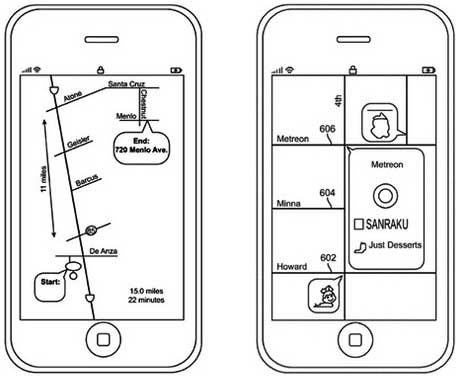
Long before Apple officially announced the new map platform they will release in iOS6 to replace the incumbent Google Maps as the default map provider it was clear they were moving in the direction of building their own map product. A couple of interesting patents, submitted last August, reveal a plan to produce what they call “schematic maps”, or what we might call a ‘back-of-a-napkin’ doodle map. They describe a map where traditional map must-haves like scale and information density take a back-seat to essential functionality: how do I get from here to point B.

It works like this: instead of producing a map that contains a completely accurate rendering of the surface of the earth, a to-scale street network and all the businesses, landmarks and whatever points of interest that might exist in a given space (the direct digital evolution of a traditional topographical map or street atlas), the “schematic map” looks more like something you would draw for a friend on the back of a beer coaster to help them get to the next pub: a simple line describing the streets and turns you will walk (most likely not to scale), maybe one or two major landmarks to help with navigation, and a big “x-marks-the-spot”.

Apple schematic maps.Apple schematic maps concept mockups. Source: Patent application.
This is a radically different approach to maps because it challenges the deep-rooted assumption that a good map is always to scale, includes as much peripheral information as possible and has a north that points to the top of the page. Here, they literally re-draw the map using a completely different abstraction; one that isn’t bound to the reality of the streets and curves of the earth.

Nokia Maps – City Exploration

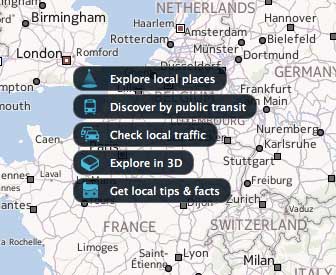
In a new feature recently released on maps.nokia.com, we make the map itself a discovery entry point by simply leveraging the existing cartographic symbols and text on the map surface as a new kind of navigational control.

We’ve learned from years of working with maps that a common use case is simple, often quite random, exploration of the world. In the same way people used to spin a globe around or flick through the pages of a world atlas to explore the cities and countries of the world, today people use digital maps to just see how the cities and countries of the world come together.

With City Exploration, you can move your mouse over any part of the map (on a country or continent zoom level) to dive right into detailed information nearly all major cities. Live traffic information, city facts, public transport information and 3D views are just some of the content that you can explore, right from the map.

City Exploration on maps.nokia.comCity Exploration on maps.nokia.com.

Now, the surface of the map starts to become the whole atlas, instead of part of the contents.

The arms race between major mapping platforms and consumer products in the past years has been largely centered around data: more, more accurate and better quality. As data becomes cheaper and more and more a commodity, the next source of differentiation will be a fundamental change in how we use and view maps. These two examples show the start of the shift, but there is much more to come.

Cracking eggs

They say you can’t make an omelet without breaking a few eggs. That’s true.

You can, however, make an omelet without smashing eggs and getting egg-shells throughout the whole meal.

The act of breaking the eggs open is a controlled, thoughtful act. It’s not panic.

When you’re working on a new product strategy, fixing a bug, planning a meeting or refactoring a piece of code, think to yourself: are you smashing eggs, or breaking them?

The Product Definition

The Complete Product Owner series - Act I: The Product

The Complete Product Owner
Act I: The Product

This post is part of the “Complete Product Owner” series.

A product owner is the owner of a product: so it makes sense to start our exploration of the product owner role with defining the actual product. What is it? What does it do? What value does it add? Who is it for? These are some of the questions that you’ll need to be able to answer. It seems obvious, but it is surprising how many product people I meet who cannot answer some of these questions convincingly.

The best product owners know their product inside out, but they can do more than simply recite a list of features… they can answer the core questions of: what are you building, how you are building it, and why. You are the product expert.

The Consumer Value Proposition

A very useful tool for expressing your product is a consumer value proposition (CVP). A value proposition is a statement that addresses the key questions: what does the product do, who is it for and, most importantly, how it adds value for a consumer.

As an example, consider the following two pairs of women’s shoes:

Shoe 1
Tom’s Catino Ballet Flats
Shoe 1
Giuseppe Zanotti boots


While being obviously very different shoes for (presumably) very different occasions, the specific value propositions set them apart even more.

The Tom’s ballet flats cost a fairly standard $79, are designed to be comfortable and made from sustainable resources; but unique to Tom’s shoes is their “One for One” program: for each pair of shoes sold, Tom’s gives a pair of shoes to a child in need around the world. The unique value proposition here is that when you buy Tom’s shoes you can also help needy children in third world countries.

The Giuseppe Zanotti boots have a very different value proposition. At around $1,400 they set a very different expectation in terms of price. Here the value that the consumer purchases is prestige, glamour and exclusivity. The core function of a shoe (comfort and protection of the feet) takes a total backstage in this proposition to make way for luxury and glamour.

Note that the CVP is more than just a simple list of features. The Tom’s proposition describes the what (shoes, comfortable), and describes differentiation (how they are different from other shoes) by creating a resonating focus on the aspect of giving shoes to needy children. The best CVPs are not only factual, but emotional as well.

The Consumer Value Proposition is a very useful tool and will help you explicate the core value of what you are producing.

What do you stand for?

A good question to ask in any product team is: “what do we stand for?” When a consumer hears about our product or company, what do we want them to think about?

Tom’s shoes stand for helping children in need. At Nokia we stand for connecting people, and empowering people to live adventure everyday. One level deeper, at Nokia Maps, we stand for putting you and your neighbourhood on the map, allowing you to be a local, anywhere.

Understanding what you stand for as a product team helps align the vision for the product and sets a common direction within the team. The most productive teams have the knowledge and context to make good decisions at all levels of the team, and when everyone has the same beliefs about what you stand for as a team, everyone can make better informed decisions that continue in the best direction for the product and the team.

Why?

Closely related to what you stand for is the why. That is, why you are building this product in the first place: what are the core beliefs that you have that lead you to invest in building this product? What is it that you believe in that makes you do this?

When “Tall” Tim Pethick started the phenomenal fruit juice brand “Nudie” in Sydney in 2003, he believed that bottled fruit juices should be produced with 100% fruit: no preservatives, no additives, no concentrates. This desire for pure, fruit-only juice enjoyment and the story behind it became a core part of the Nudie brand image.

Simon Sinek gave a fantastic TED-talk on the topic of why, which is highly recommended viewing.

Who is it for? Market Segmentation

As important as what is who. In order to create a product that solves the needs of your users/customers in the best way, you need to understand who your users are. This starts with understanding your market segment.

Segmentation is all about understanding your target market; or in other words, about breaking down the world of people into smaller sub-sets that define more specifically what kind of people are your actual potential users. My wife doesn’t play video games and isn’t in the market for a new PlayStation, for example. She is not the target market.

The Nintendo Wii is the most successful game console of the current generation, and the third most successful console of all time (in terms of units shipped, having shipped over 95 million units as of March 2012). At the heart of the innovative business model that enabled the success of the Wii is the segmentation strategy: Nintendo chose to focus on a very different demographic than other consoles: instead of focussing on the traditional (and extremely competitive) “hardcore gamer” market, Nintendo targeted the Wii towards a broader demographic of “casual” gamers. This allowed them to decrease the focus on cutting-edge performance and graphics required to compete in the “hardcore gamers” segment and allowed them to produce a more family-friendly and cost-effective device that has been decisive in their success.

Once you understand your specific market segment, you can target your designs and services directly for these people. In a later post we’ll look at building user profiles to represent your target market to help in this process.

The Elevator Pitch: sell your product in 30-60 seconds

We’ve all heard the expression “Elevator Pitch”, but here’s a short bit of revision: the idea is to imagine you find yourself in the elevator with your CEO, and she asks you: “What are you working on?” In the time it takes for an elevator ride you now have to pitch your product.

The point is that you have only 30 seconds to make someone understand what you do and be interested or excited about it. It’s a nice exercise because it forces you to focus on what is important to engage someone with your story. In nearly all cases reciting a laundry-list of features will not cut it: you’ll need to tell a story that highlights what value you bring to users.

My tip is to really practice your elevator pitch. Even if you never end up with your CEO in an elevator, you’ll have forced yourself to consider what is important.

For a nice example of an elevator pitch, check out Evernote CEO Phil Libin, present his 50 second elevator pitch for Evernote.

The spur-of-the-moment demo

As we used to say in the boy scouts, “Always be prepared”. You should always be ready with your elevator pitch, and likewise you should always be ready to give a demo of your product. Have a couple of different demo scripts ready to pull out at a moment’s notice. I have three that I use for Nokia Maps based on how much time I have to demo: 5 minutes, 10 minutes or 15 minutes.

You never know when you’ll be called on to demo the product spontaneously, and every demo counts: so being prepared will ensure you give a great demo, always.

Summary

Know your product, as you know yourself. Never forget that you’re the expert in your product.

One important thing to remember is that knowing and communicating are two very different things. It doesn’t matter how well you know your product if you are not able to communicate it to your team, your customers or your partners.

In the next post in the Complete Product Owner series we’ll look at the competitive landscape.

Resources


The Complete Product Owner series - Act I: The Product

The Complete Product Owner
Act I: The Product

This post is part of the “Complete Product Owner” series.