The users lose

When the giants of the tech world play the game of thrones, it’s the users who pay the blood price.

About two weeks ago Twitter removed the Instagram inline preview of Instagram photos, meaning Twitter users can no longer see Instagram photos their friends have posted directly in the twitter stream: users now need to click the Instagram link, and open the Instagram site in another browser tab to view the photo.

Why? Due to hostilities between Twitter and the now Facebook-owned Instagram that can most likely be traced back to bad vibes stemming from some sneaky dealings during the company’s acquisition.

This is just the latest example of the user’s experience suffering as successful and loved products start to feel the investors’ pressure to focus on monetisation and revenue. LinkedIn users felt a similar blow when tweets stopped appearing on people’s user profiles as Twitter tightened up access to the API back in June.

The very open philosophy of APIs and data exchange that helped to build companies like Twitter is slowly getting left by the wayside in the search for sustainable monetisation strategies for “Web 2.0” products.

Where does this leave users?

Application experiences are increasingly taking place behind walled gardens – meaning that all, of the majority, of user’s interaction with the service is taking place within the proprietary application interfaces (twitter.com and the official twitter apps, in Twitter’s case, for example). This will lead to less choice and fewer options for users in terms of where and how to consume content and interact with the service.

Moreover, the products and services created by 3rd party developers leveraging APIs such as twitters have heavily driven innovation in the core products and the surrounding ecosystems.

When the first web mashup was born seven and a half years ago when Paul Rademacher reverse-engineered Google Maps to put craigslist rentals on a map it set a precedent that influenced, maybe more than anything else, how the web would develop for the following years. The social web as we know it today, led heavily by product companies such as Twitter, Facebook, Tubmlr, Foursquare, WordPress and many others have been built on a philosophy of openness, hacking and mashing up diverse data assets into new and compelling experiences.

As more and more of the power on the web is drifting toward more closed and walled-up product ecosystems like Facebook, Google+ and others, we need to call on these companies to remember the philosophy of openness that built the web that allowed them to succeed. Data should be becoming more, not less, available and sharable, and the pillars of the modern social web are in the position now to set the precedent for the next 7 years of innovation on the social web.
The stand-in Lumia 920

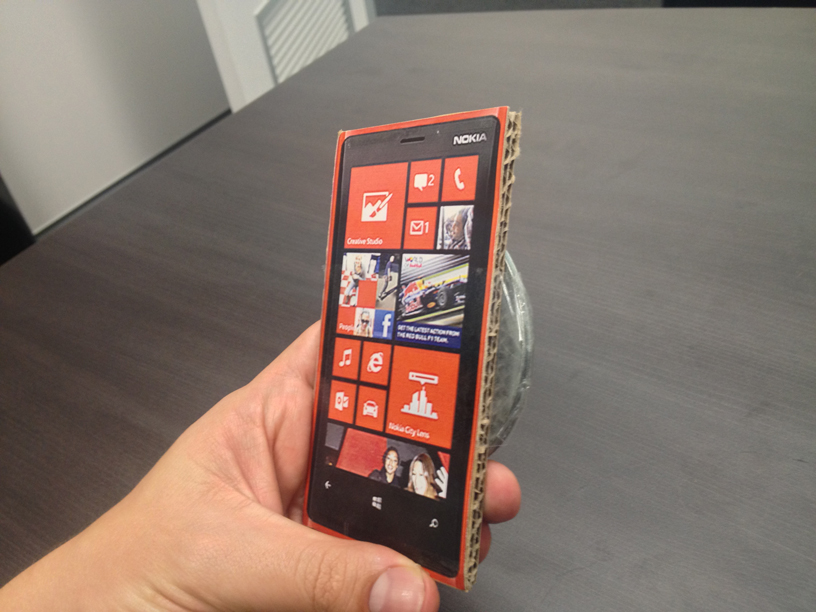
Can’t wait for your Nokia Lumia 920? Although shipments have started, not everyone has been able to get their hands on one yet.

But here’s an inventive solution constructed by my friend Geoff to “get a feel for the Lumia”.

Almost as good as the real thing!

Inspiration from Tennyson (and Bond)

Inspiration is oft revealed in the unlikeliest of places. Such as, for example, the latest Bond film Skyfall, where M quotes the marvellous Alfred Lord Tennyson and his amazing work, ‘Ulysses‘:

Though much is taken, much abides; and though
We are not now that strength which in old days
Moved earth and heaven; that which we are, we are;
One equal temper of heroic hearts,
Made weak by time and fate, but strong in will
To strive, to seek, to find, and not to yield.

The piece was also used extensively during the 2012 Summer Games, as you can read about here.

Skyfall was a cracking film, too.

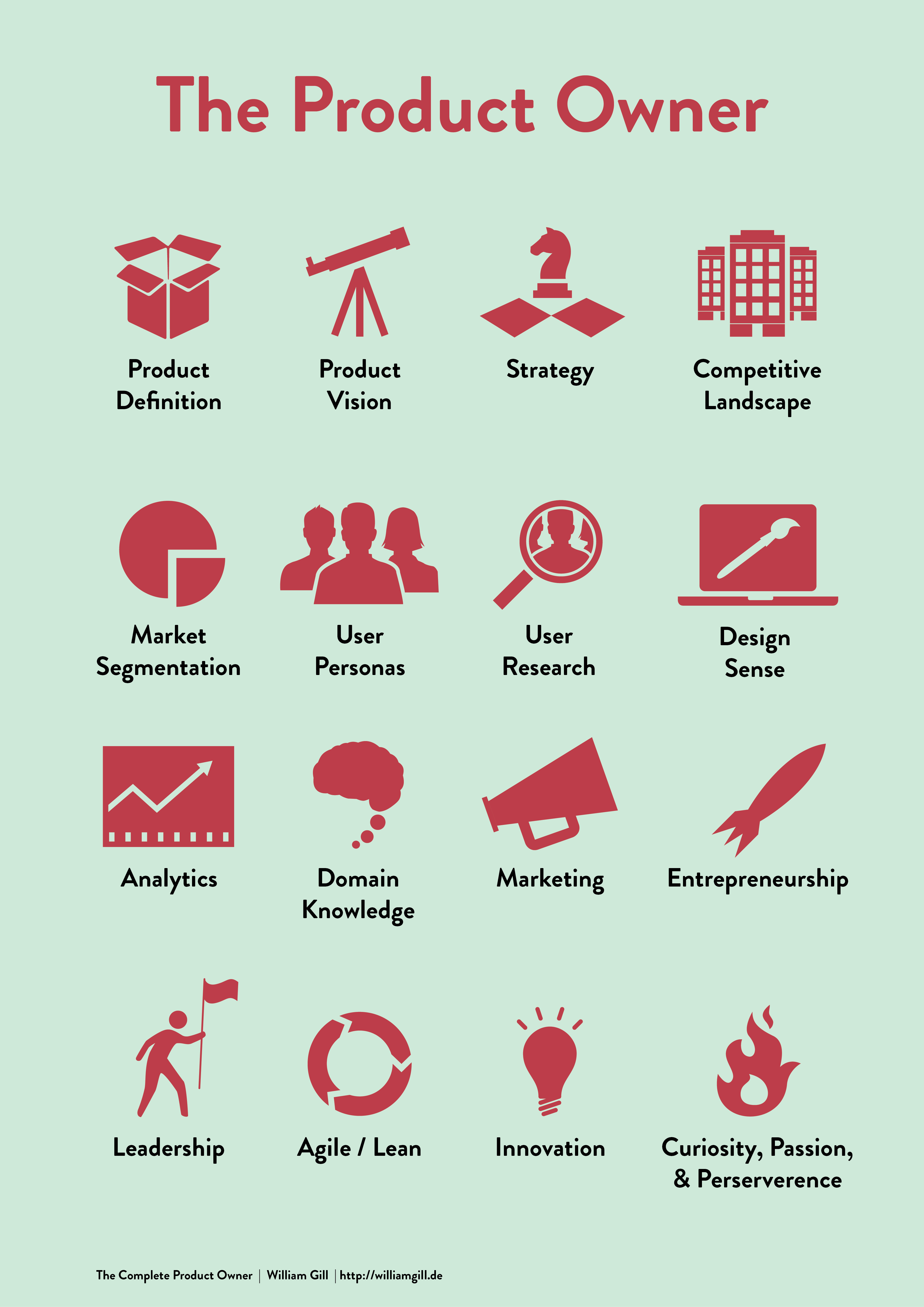
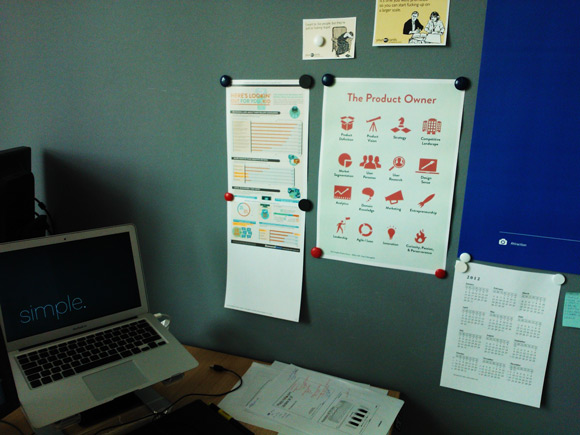
The Product Owner – the poster

Being a Product Owner sure is a lot of work!

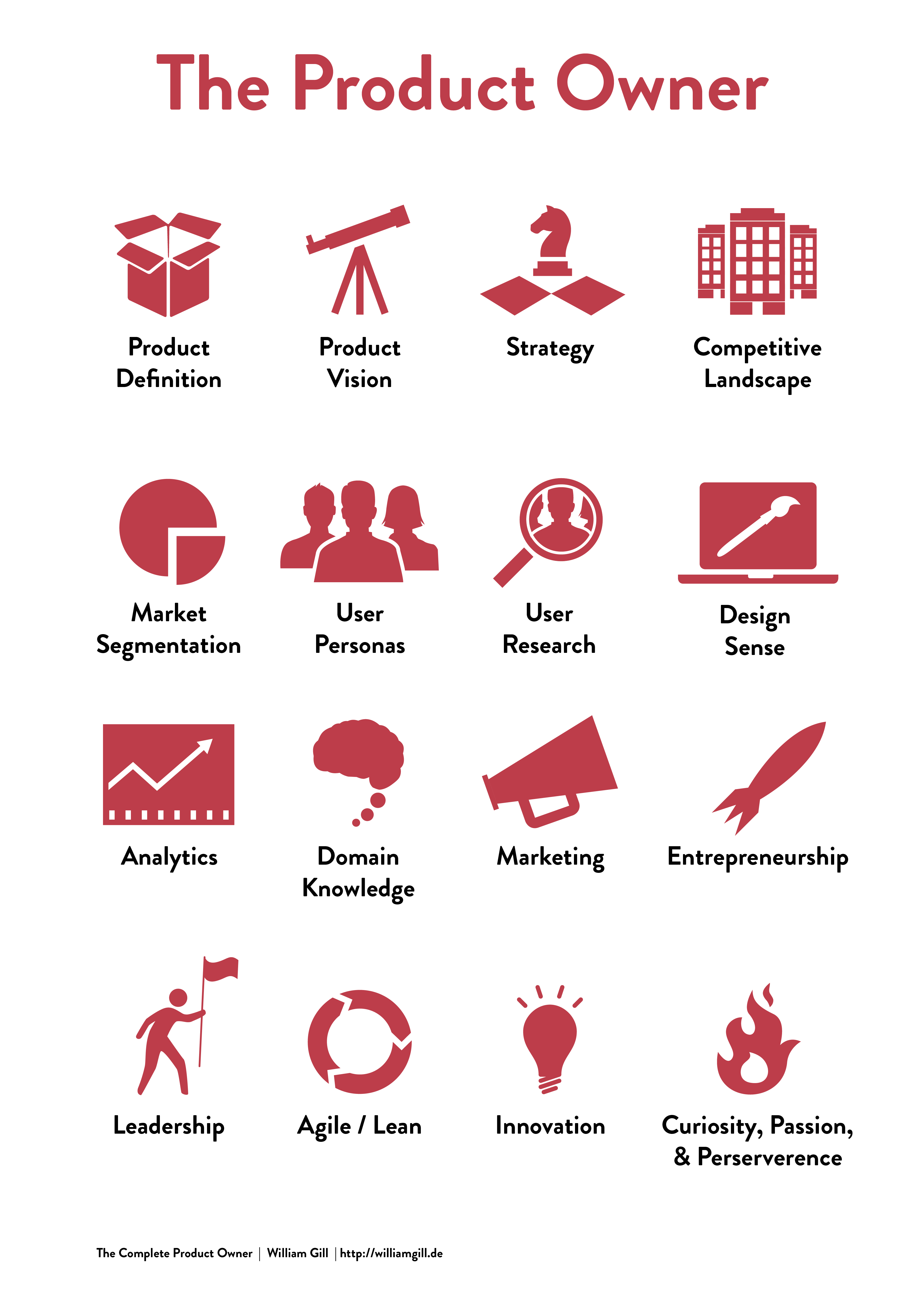
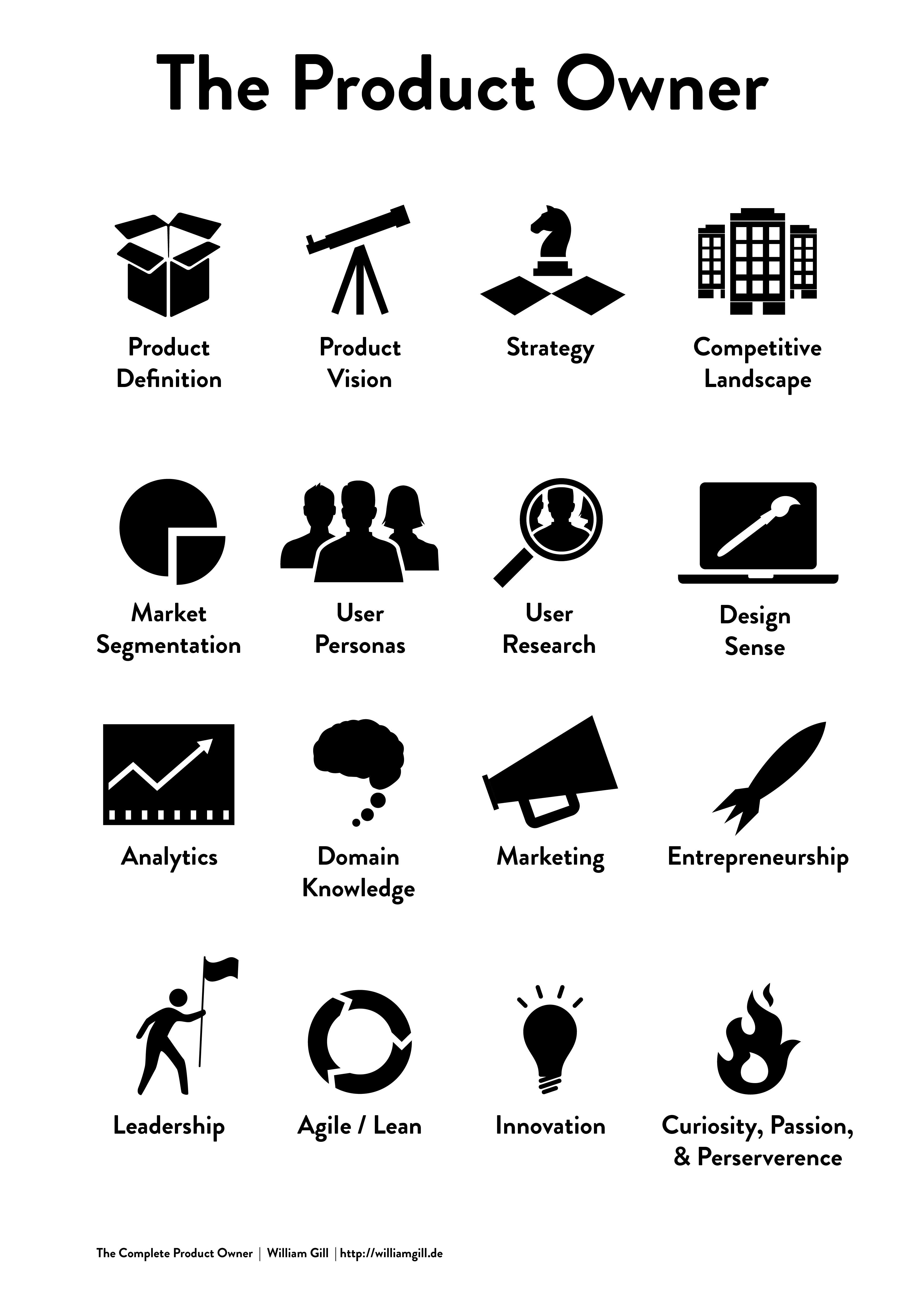
Following my talk at the recent ALE unconference in Barcelona, I re-made the iconography used in my talk and turned it into a poster: The Complete Product Owner Poster.

The poster is available in three colour combinations, and is printable on any normal office or professional printer. It also looks great pinned up on the wall next to your desk. 🙂

Click the version that you would like to download below to download and print the PNG file.

Enjoy!


Apple Maps and the Tall Poppy Syndrome

Ever since Apple launched iOS6 with their brand new Apple Maps, the web has been flooded with reports, posts, tweets and even special tumbler blogs dedicated to pointing out how ‘catastrophically bad’ Apple’s Maps product is.

The cacophony reached a crescendo on Friday with this post from the normally respectable Business Insider, pointing out how the portion of map used for the icon for the Apple Maps app isn’t 100% cartographically accurate. The freaking icon.

Is it just me, or is this getting stupid?

Sure, it’s the first version of a product and they have some work to do. We can all point out problems and issues with it. I work for Nokia building Nokia Maps, and I know how complex a map and navigation product is. But are these kinds of relentless and ultimately pointless attacks proving anything?

My seventh grade science teacher used to call it the “Tall Poppy Syndrome”. In a field of poppy flowers, when one poppy grows taller than all the others, the other poppies do whatever they can to pull it back down again.

That’s what’s happening here. We have all sat by in wonder, awe and respect as Apple charted their amazing course to recovery to become the most valuable company on the planet. And yet now the world that rocketed Apple to success is trying to pull that poppy down again.

The mob is fickle.

The Germans have a fantastic word in their language: Schadenfreude (n). Literally translated it means the happiness you feel at experiencing the misfortune of others. There’s even an adjective form: schadenfroh.

It seems the entire tech world is enjoying seeing Apple squirm after the barrage of negative feedback and criticism over the Maps product. A whole sea of schadenfroh tech journalists, bloggers and consumers smiling to each other and insisting that they could have done better or would have advised Apple differently.

Even after Tim Cook’s public apology people were quick to point out that “Apple apologies are actually not that infrequent”, or absurdly “That would never have happened if Steve Jobs were still alive.”

Even as the iPhone5 broke all kinds of sales records at its launch last weekend, it clearly wasn’t ‘good enough’, as Wall Street was disappointed, and that makes tech bloggers sad.

It all kind of reminds me of a track from William Shatner’s classic album, Has Been. He says:

Riding on their armchairs
They dream of wealth and fame
Fear is their companion
Nintendo is their game
Never done jack and two thumbs Don
And sidekick don’t say dick
They laugh at others failures
Though they have not done shit

The “tweet pitch”: an elevator pitch in 140 characters

What’s the one sentence that describes your product?

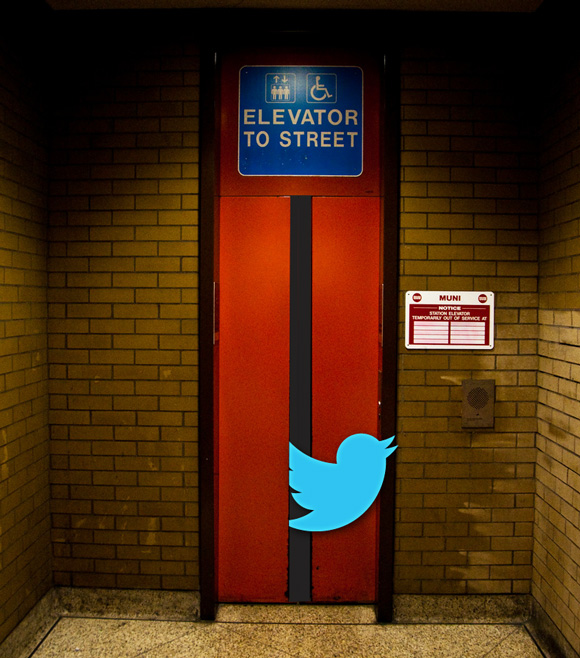
We all know about the Elevator Pitch – the 30 second pitch that you would deliver to your CEO or to an investor whom you meet in an elevator, where you have until the elevator doors open to pitch your great idea. I’ve written before that it’s essential for every Product Owner to not only have his or her elevator pitch always ready and prepared, but even to practice it so that every opportunity you have to deliver it is as good as it can be.

In our modern world of constant interruptions, short attention spans, skim reading and ever-faster elevators, however, you might not get 30 seconds. You certainly won’t get 300 words.

I think what we need to understand is the tweet pitch. What is the core essence of your product, in 140 characters or less?

It’s an interesting exercise because, like preparing an elevator pitch, it forces you to boil your product down to the fundamental core.

For sure, you can’t say everything about your product in 140 characters – you can’t describe your vision, your market segment, your business model and your strategy – but that’s precisely what I like so much about the tweet pitch. It forces you to get to the core.

Several other products (probably) do the same thing or something similar. So what is important about you? What makes your product different?

Every product has a market segment. But is that what is unique about yours?

If you only had 140 characters to sell your idea – which characters would you choose?

(I cannot claim that I coined the term “tweet pitch”. It’s been written about before at least here and here, and I have to give credit to Timm for putting the idea in my head this week).

Microsoft gives all its employees a new phone, tablet and PC… and I think that’s real smart

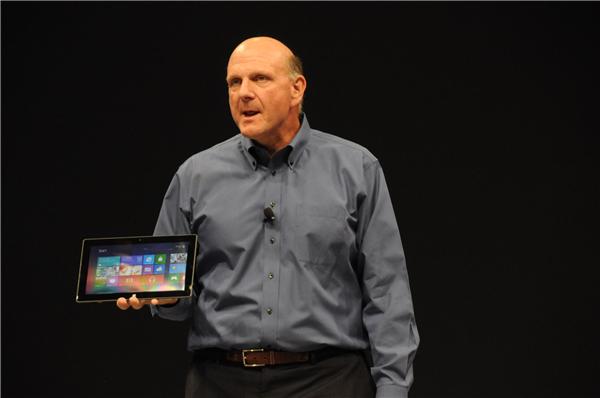
Geekwire reported on Friday that Microsoft announced at their annual employee conference that every full-time employee will receive a brand spankin’ new Windows 8 mobile device, Windows 8 computer and a new Surface Tablet – for work and private use.

With over 90,000 full-time employees, this is not an inexpensive exercise… with a generous estimate of $1000 (cost price) per head for a phone, a PC and the Surface tablet, it’s over 90 million bucks. So why would they do this? (And why do I think it’s probably one of the smartest ways to spend 90 million bucks?)

  • It shows they are committed to their product – that they believe in their product – and it will help the employees of Microsoft remain focussed and passionate about their mission. Microsoft are coming late to the party when it comes to the mobile and tablet space, and the Windows Phone ecosystem is at a critical stage where it needs to really take off, and quick – and the whole team at Microsoft will have to keep true to the mission to make it happen.
  • It’s a sign of confidence to the outside world. Microsoft is saying; “we can afford to have all our employees using these – they will be successful”.
  • It also shows commitment to their employees, and will be seen as a nice bonus gift by everyone.
  • It turns every single one of their employees into an immediate marketer and ambassador. Sure, they all are (or should be) anyway – but when they actually have the physical product in their hands to show their friends and family, it is quite something else. Every Microsoft employee will be an expert ambassador, and will spread the word and passion to the rest of the world. It’s seeding the market with 90,000 highly engaged customers.

A company’s best and most passionate ambassadors should be the employees themselves. Making sure they are up to date with the latest products is a smart way to make every employee a vigorous promoter.

Plus: $90 is small change relative to Microsoft’s 261 billion market cap.

The Law of Two Feet – every day

My feet

In open space-style workshops/sessions there’s a concept called “The Law of Two Feet”. It means that if, at any time, you feel you are not contributing to the session, or if you are not learning something, then you should use your two feet to leave the session and find one where you can contribute and where you can learn something.

It’s a beautiful rule because it gives all participants the permission to go where they think they can be the most effective.

It occurs to me that nearly all the meetings I attend in the workplace could benefit from having meeting participants understand this concept.

So often we find ourselves in meetings that are not valuable for us. Sometimes we’re invited “just for our info”, so we go along just to avoid the risk of missing out. Sometimes meetings go so off-topic that the value starts to dissipate. And sometimes the meeting probably wasn’t necessary in the first place.

In any of these situations, I propose to you that you invoke your right to use your feet. If the meeting isn’t valuable for you; if you cannot contribute or cannot learn something valuable – then leave.

You have my permission!

ALE 2012: My presentation: “The Product Owner – The Accidental Profession”

The Stork and the PO

Here you can find the slides from my presentation at the Agile Lean Europe 2012 Unconference in Barcelona this week.

Download the slides

Thank you to everyone who attended and gave feedback!

On new solutions to old problems…

Edward Bear

“Here is Edward Bear, coming downstairs now, bump, bump, bump, on the back of his head, behind Christopher Robin. It is, as far as he knows, the only way of coming downstairs, but sometimes he feels that there really is another way, if only he could stop bumping for a moment and think of it.”
— A. A. Milne